Unpacking the ‘Authorized Discourse’ of World Heritage. The Case of the Erzgebirge/Krušnohoří Mining Region
Klára Ullmannova
The article is peer reviewed
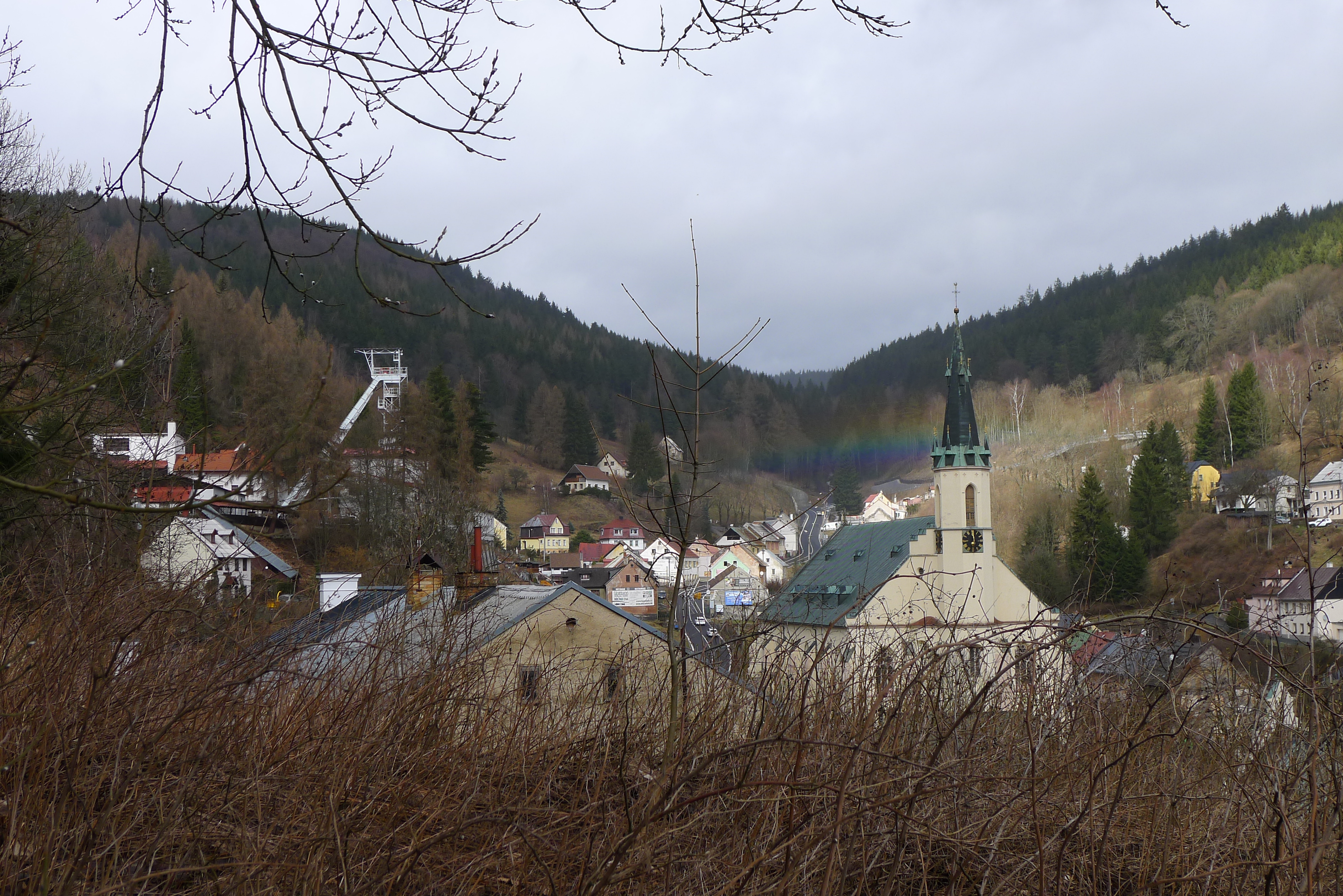
Introduction
With this article, I aim to contribute to the discussions of how an ‘authorized heritage discourse’ operates in the process of construction of a World Heritage site, with a focus on how a World Heritage nomination and inscription work when approaching the cultural-historical context of Central and Eastern Europe. To this end, I have chosen the World Heritage (WH) Erzgebirge/Krušnohoří Mining Region – a transboundary cultural landscape split between Germany and the Czech Republic – as a case study. This convinces me of the persisting need for critical approaches to heritage, determining the perspective I attempt to make use of in this text, adapted from my master thesis, defended in 2020 at Uppsala University (Ullmannová 2020).
This text confronts the globalized discourse of the World Heritage (WH) site Erzgebirge/Krušnohoří with the local histories, using mainly documents from the nomination process and from the United Nations Educational, Scientific and Cultural Organisation (UNESCO) as material. The studied texts are then discussed with inspiration by the method of discourse analysis, in combination with theoretical frameworks established by previous research in (critical) heritage studies.
Erzgebirge/Krušnohoří was inscribed on the WH list at the 43rd WH session in Baku in 2019, following a long preparation process. Erzgebirge/Krušnohoří is a transboundary site, a cultural landscape spanning 6766 hectares of property (WHC.unesco.org). It consists of 22 locations scattered across the mountain range region – the Ore Mountains (the English toponym for Erzgebirge in German and Krušnohoří or Krušné hory in Czech), located on the border between present-day Germany and Czech Republic.
By approaching heritage as a contemporary product and process, it becomes apparent the production process itself is intrinsically controversial. Utilizing the concepts of ‘authorized heritage discourse’ as understood by Laurajane Smith (Smith 2006) and ‘difficult’ (Samuels 2015, 114) or ‘dissonant’ (Tunbridge & Ashworth 1996, 20–21) heritage, I try to examine what aspects the authorized heritage discourse manifests as well as what aspects it may work to omit. Studying the discourses making up the Erzgebirge/Krušnohoří as a WH site enables observing and questioning authorized conceptions of heritage as practiced by an institution of authority, which frames heritage sites as ‘global, universal.’ WH sites still have their separate and localized life histories (Di Giovine 2008, 64) and it can also be studied how the acquired universal status interacts with the localized attributes. In the case of the Erzgebirge/Krušnohoří WH site the issue becomes intricate due to engagement of two countries in the nomination, and due to the complicated history, the vastness and multilayeredness of the borderland cultural landscape that suddenly – through the WH list – needs to be concisely communicated to a global public.
The Ore Mountains’ History in the Context of Central and Eastern Europe
The Ore Mountains region where the recently designated WH site Erzgebirge/Krušnohoří is located is split by a border between present-day states of Germany and Czech Republic, historically the kingdoms of Saxony and Bohemia (Nomination Dossier 2017, 29). The Ore Mountains were populated in the Middle Ages along with the discovery of silver and tin ores and gradually became a culturally unified area. The first divergences started with the Counter-Reformation, and the region was ultimately divided by the events of the 20th century. In the inter-war Czechoslovakia, the Bohemian borderlands were inhabited largely by German-speaking1 population, that settled in the area mostly after the Thirty Years’ War in the early 17th century (Eberhardt 2002, 99). In the aftermath of the Second World War, during which the borderland regions of Czechoslovakia (Sudetenland) were annexed by Germany, almost the entirety of the German-speaking population of the border regions were expelled from the country in two waves. The initial phase, known as the ‘wild expulsion’, led by semi-military units, “was poorly organized and controlled within a vague legal framework,” and displaced up to 800 000 people from their homes (Spurný 2013, 84). The second, more organized phase continued in 1946 and followed the agreements of the Potsdam Conference, and reduced the pre-war population of Czechoslovak Germans from 3 million to 200 to 300 thousand (Guzi & Mikula & Huber 2019, 8). A process of resettlement occurred in parallel with the expulsion. Almost 2 million settlers from the inland arrived by 1947 (Guzi & Mikula & Huber 2019, 8). The events were unprecedented in the area given the numbers of displaced people, when entire populations of towns were forced to leave, and their homes were resettled by people coming from entirely different areas. Social structures were disrupted to such extent the affected areas are dealing with the effects to this day (for more information see Murdock & Boutilier 2010).
Uneven development interrupted and conditioned by ideological changes and displacement is nevertheless particular to the whole region of Central and Easter Europe (Grazuleviciute-Vileniske & Urbonas 2014). Heterogeneity is important from the perspective of understanding the identities of the present-day Central and Eastern Europe, full of conflicting experiences, which make it difficult to fit it into overarching categories. Martin Müller (2018) uses a well-known anecdote to describe what encapsulates this diversity and its effects on individual lives: “It is about the old man who says he was born in Austria-Hungary, went to school in Czechoslovakia, married in Hungary, worked most of his life in the Soviet Union, and retired in Ukraine. ‘Travelled a lot, then?’ is the old man asked. He answers: ‘No, I never moved from Mukachevo.’” This is a familiar trope for most people living in Central and Eastern Europe throughout the 20th century.
As Monika Murzyn (2008, 315, 335) writes, what the uneven development resulted in is often the disappearance of communities and minorities and their rich heritage. The displacement affected all social groups and created the present, much more ethnically homogeneous societies. Therefore, the question of ‘heritage without heirs’ or ‘orphaned heritage’ (Rampley 2012, 11), the acceptance and inheritance of a difficult heritage, and the acts of remembering or forgetting, gain in importance in the context of this space (Murzyn 2008, 315, 335). The specificities of heritage in this region can pose challenges for the “mainstream” critical heritage discourse.
I believe research in heritage studies aiming to challenge the authorized heritage discourse (AHD) can benefit from further examination of the heritage of Central and Eastern Europe specifically. The region and its position of “neither one nor the other” (Ifversen 2019, 29–30) is a reservoir of ambivalent, contested, and difficult heritage, where positions of power have shifted rapidly and dramatically during a mere century, where disinheritance is more common than inheritance of heritage. Further, I believe that in a democratic society, it is urgent to also search for and design approaches and practices alternative to the AHD that can accommodate the plurality of narratives and encourage critical thinking through heritage.
The Making of Erzgebirge/Krušnohoří: Nomination to the World Heritage List
The idea to nominate the Ore Mountains for the WH status can be traced back to the interaction between the Saxon state government and the Technische Universität Bergakademie Freiberg, who collaborated on submitting the site to the German WH tentative list in 1998 (Olbernhau.de). The strive for the nomination of Erzgebirge/Krušnohoří for the WH inscription did partially take place also on the platform of the shared Euroregion Erzgebirge/Euroregion Krušnohoří (Euroregion-Erzgebirge.de). The developments that followed the initial discussions on the nomination of Erzgebirge/Krušnohoří as a WH site were mainly expert-led efforts working towards the nomination, such as expert feasibility and implementation studies, and the establishment of the Förderverein Montanregion Erzgebirge association (a joint regional development project established by the Saxon Erzgebirge regional management, the Institute of Industrial Archaeology and History of Science and Technology, and Saxonia, a company specializing in revitalization). In 2010, a non-profit organization Montanregion Krušné hory – Erzgebirge o.p.s was established for the Czech side (Montanregion.cz). Between 2007 and 2012, 85 components or objects distributed over the whole mountain range were selected as candidates for inscription: 79 of them located in Saxony and 6 in Bohemia (Mining Heritage of the Montanregion, 2014, 10–13). The implementation studies and other activities, including the publishing of the “Mining Heritage of the Montanregion Erzgebirge/Krušnohoří“ guidebook (2014), were carried out with the support of the EU regional development fund (SN-CZ2020.eu). In 2012, a mixed working group of experts was set up to prepare the WH application (Montanregion-Erzgebirge.de).
The German-Czech WH Nomination Dossier containing 85 components was finalized in 2013, signed by the two State Parties in early 2014 and submitted to the UNESCO World Heritage Centre (Montanregion-Erzgebirge.de). An evaluation period followed in 2015. As International Council on Monuments and Sites (ICOMOS) (2019, 237) “encouraged a clarification or qualification of the documents to improve the chances of a successful inscription in to the WH List,” it was decided to withdraw the WH application and re-submit it after revision with a reduced number of components in 2017. ICOMOS (2019, 237) expressed a concern over “an extreme atomization of heritage assets” in some cases, leading to the change in the nomination approach. In the view of ICOMOS (2019, 247), this allowed the “heritage assets to be grouped into more comprehensive and legible landscape units.”
The final version of the site description emphasizes how the components represent the “spatial, functional, historical and socio-technological integrity of the territory (…),” profoundly and irreversibly shaped by 800 years of polymetallic mining (UNESCO 2019, 261).
Finally, the Erzgebirge/Krušnohoří Mining Region was inscribed on the WH list following the 43rd session of the WH Committee in Baku in 2019 based on three of the WH criteria: II, III and IV (UNESCO 2019, 261–264). The integrity is ensured by each of the site’s 22 components “illustrating the complex process of configuration of the mining cultural landscape and to establish the boundaries of the property and the buffer zones” (UNESCO 2019, 263). Of the components, 17 are located in Germany and five in Czechia.

The selection of components was guided partially by a comparison with other heritage sites in the world known for ore mining. The distribution of the final 22 components ultimately nominated is determined by the occurrence of ore deposits which led to the establishment of mining districts, and concrete descriptions of elements in the Nomination Dossier are also organized in chapters according to particular ores mined in the place. Although the nomination addresses the intangible heritage of the area, due to the nature of the WH list it is not possible to specifically designate immaterial aspects on this list (for those purposes, a separate List of Intangible Cultural Heritage was created). The premise for the selection of components of the serial property was – within the intentions of the WH Operational Guidelines criteria – constructed around the notion that exploitation of polymetallic ores as the guiding principle for the determination of the Outstanding Universal Value (OUV), and therefore for their inscription. Establishing such categories alludes to what Waterton and Watson (2015) call the lingering “ghosts of canonical positivism” in the heritage field, and instigates further analysis in the following chapters.
Authorized Heritage Discourse, Difficult Heritage, and the Critique of the World Heritage List
The concept of ‘authorized heritage discourse’ (AHD) was coined mainly by Laurajane Smith’s 2006 publication Uses of Heritage, which draws on critical discourse analysis to map the connection between power and the language of heritage (Harrison 2013, 112). I perceive the concept as a tool serving to highlight and critically examine a set of hegemonical discourses institutionalized in the heritage field and uncover their biases. According to Smith (2006, 29, 31, 34), such authorized discourses approach heritage as predominantly innately valuable ‘things’ of ‘the past’ which need to be ‘translated’ by experts for the public in a top-down manner. Heritage in the view of AHD is also perceived as a generally good, cohesive, and neutral matter. Smith (2006, 99) believes the European AHD has dominated the World Heritage Convention through the notion of universality, which is “deeply rooted in the European cultural tradition (…), the processes of colonization and imperial expansion and assumptions about the cultural and technological evolutionary achievements of the West.”
While the term ‘authorized heritage discourse’ describes and is critical of the hegemonical discourse(s), the concept of ‘difficult’ or ‘dissonant’ (Tungbridge & Ashworth 1996) heritage describes, by contrast, how that which authorized discourses omit, can elucidate and challenge the assumption that heritage is always good, cohesive, and neutral. Difficult heritage may also be perceived as “troublesome because it threatens to break through into the present in disruptive ways, opening up social divisions, perhaps by playing into imagined, even nightmarish, futures” (Macdonald 2009, 1).
A small number of ‘difficult’ sites have appeared on the WH list, despite UNESCO making a point to restrict the inscription of sites of similar nature on the list in 1979 (Samuels 2015, 112). Joshua Samuels (2015, 114) calls for the acknowledgement of the fact that the ‘difficulty’ is not within the sites themselves, but rather in the ways of dealing with their difficulty, the process of heritage-making, pointing out that the rhetorical strength of the ‘difficult’ heritage lies in a recognition of everyday ambivalence at its core.
Approaching heritage rather as a process also aligns with the perspective assumed by this text. In a constructivist perspective, no hierarchy or traditional authority structures are perceived as inherent. Realities are approached as socially constructed and definitions are not singular but allow for plural interpretations and meaning (Gibson & Pendlebury 2009, 1). I acknowledge that this text is also one way of constructing a narrative and it can contribute to existing discussion, but it does not mean to provide an exhaustive aggregate of all heritage in the Ore Mountains. It is rather a reflection on how the abstract term of authorized heritage discourse manifests in concrete situations in conservation practice and what consequences it produces. Waterton and Watson quote Law and Urry to argue research methods “do not simply describe the world as it is, but also enact it… [They] are performative; they have effects; they make differences; they enact realties; and they can help to bring into being what they also discover” (Waterton & Watson 2015). Through the use of concepts and methods, I am not only reflecting on the existing discourses, I am also constructing one – I acknowledge the author’s role is not neutral. In this place I also wish to acknowledge that I have lived for most of my life in the Czech Republic, although not in the area of Ore Mountains, and that I was not involved in the preparation of the WH nomination in any way. My nationality has nevertheless contributed to the focus within the discussion, which is concerned substantially with history of the Czech section of the WH site.
Difficult Heritage of the Recent History
Difficult heritage as a concept refers to the inner conflict in the construction of heritage sites, connected to memorialization. To Smith (2006), memory in relation to the idea of a ‘positive’ heritage as constructed by the AHD causes tension, exposing the multivocalities in heritage construction. I believe ‘difficult heritage’ elucidates the manifoldness of the conceptions of heritage of different social actors. This needs to be taken into account in order to grasp the complexity and ambiguity of heritage, to prevent “smoothing over” the differences (Waterton & Smith & Campbell 2006, 341) and silencing of possible uncomfortable pasts. The Ore Mountains represent a landscape transformed not only by mining, but also by such difficult pasts connected to it.
In the context of the authorized discourse of the WH Convention, the act of nominating mining heritage alone can help address the heritage of groups which do not belong to the economic and social elite and enhance the representation of heritage of the working class. On the other hand, there is also strong emphasis on the physical fabric (here, the ores being the main ‘initiator’) and technology at the expense of the human component of industry in the nomination. Mining in the Ore Mountains, as elsewhere, was not just about ‘innovations’, ‘achievements’, ‘improvements’ and ‘exchange of knowledge’ (as is described under Criterion II of the OUV statement of Erzgebirge/Krušnohoří), but also about extremely arduous and dangerous everyday work. In this sense, the nomination submits to the authorized discourse of the WH Convention and Operational Guidelines, which determines the criteria for the inscription on the WH list of both tangible and intangible heritage. At the same time, it cannot be said the Nomination Dossier is devoid of such aspects, since it acknowledges landscapes are “dynamic and develop over time in response to changing human values and ideologies” (Nomination Dossier 2017, 30). It tries to involve communities and substantially promotes intangible heritage, traditions and knowledge transfer as a significant component of the nomination and accompanying projects. By doing this, it also alludes to more of some of the concrete ‘difficult’ aspects of the heritage of Erzgebirge/Krušnohoří.
The nomination dedicates a chapter to intangible heritage associated with mining in the Ore Mountains, particularly miners’ associations, traditions such as parades and customs, but also crafts, music and literature. It is noted that mining and Ore Mountains became a popular topic in the literature of romanticism, and then again “during the period of the ‘real existing socialism’ of the German Democratic Republic (GDR), in this context in connection with and ultimately in confrontation with the political, social and ecological consequences of the uranium mining (…)” (Nomination Dossier 2017, 326). The relationship of literature and mining is complex and to an extent still affects the construction of mining heritage in the region today. Before the Second World War (WWII), mining and miners began appearing in literature striving to depict an authentic reality or social conflict (Sedlářová 2010, Spurný 2019, 137). With the onset of state socialism, the proletariat, including the miner as a character in art and literature, became abused as the main instrument in the regime propaganda, advocating its power as a “dictatorship of the proletariat.” The miner became mostly a schematized figure, often praised as a Stakhanovite working towards the final goal of “building a socialist society” (Sedlářová 2010). Throughout the approximately forty years of state socialism, the pivotal words and expressions of the discourse of the regime propaganda gradually became vague phrases, devoid of meaning.
After the fall of the state-socialist regime in Czechoslovakia and subsequently in the Czech Republic, along with the systemic transformation, the symbols of the previous regime were rejected, and several expressions, including ‘proletariat’ or ‘working class’, disappeared from the public discourse due to its ideological burden. The vanishing of the terms did not erase social issues, but disqualified them from the public debate in the Czech Republic. This means the option to debate the social issues and heritage of communities through the discourse of “working class heritage” utilized by some Western authors (ex. Smith & Shackel & Campbell 2011) may be dismissed because of the utilization of terminology which is deemed to be ‘refuted’. This is also a part of the ‘difficult heritage’ of mining, and although it is hinted at in the nomination as a part of the intangible heritage, it is not elaborated.
As the topic of social classes was disqualified, so was another process having to do with the Ore Mountains subject to ideologization and instrumentalization by the propaganda – the aforementioned expulsion of three million German-speaking people from the Czechoslovak borderlands after WWII and subsequent resettlement of the deserted areas by people from the inland (Spurný 2013, 84.). Through a discourse of “reliable citizens”, which was crucial to the proposed security and impermeability of the border, the state policy legitimized the violent resettlement of the borderlands population even before 1948 (Spurný 2013). The resettlement was later continued and abused by the communist party’s propaganda to promote its effort of the “building of a socialist society” by exemplary socialist workers and loyal members of the party. The expelled German-speaking population was initially vilified and later became a taboo.
The removing of almost an entire population of the Bohemian Ore Mountains (and of the whole Sudetenland) has far-reaching consequences. Spurný claims that the image brought to his mind and to that of many other historians is of the borderlands as places with neither memory nor identity (Spurný 2019, 139). Expulsion of the local people and severing of the social structures also interrupted local immaterial traditions and customs on the Bohemian side of the Ore Mountains. The material property of the expelled people was confiscated by the state through the instrument of a presidential decree before the communist coup d’état, and the decrees remain in effect until today.2 The properties were ceded to the new settlers. According to the claim of Michal Urban in an interview, “the first two generations [of settlers] did not – with some exceptions – form an attachment to the traditions and roots of the [expelled] native inhabitants,” and only in the last decade the mining traditions began to be rediscovered also on the Bohemian side of the Ore Mountains – likely with the help of the surviving tradition on the Saxon side, where many of the expellees had settled (Černá 2019).
The topic is still subject to conflict and tension, since the fates of the expelled people were often forgotten due to the sealing of the border and the silencing of this topic during state socialism. Many facts about the expulsion only became publicly known in the 1990s and 2000s, and new research3 as well as fictionalized accounts4 are still emerging. The fact that the decrees which (above else) stripped the expellees of their property in Czechoslovakia remain in effect together with new emerging research about the violent course of the expulsion is highly controversial in the public debate.
The confiscation of properties also creates consequences for heritage in the present. Many historic buildings were deprived of their original purpose and intangible aspects, and finding a new purpose can be a challenge. The measures of institutionalized protection may restore buidings, but if they remain empty shells, the protection is not sustainable in the long-term. This case has been associated for example with the town of Jáchymov, now part of the Erzgebirge/Krušnohoří WH site (see e.g. Jelen & Kučera 2017, 331).

Returning to the Nomination Dossier, it can be said it perceives the Ore Mountains as a shared region which is to be considered as a whole due to “close cultural, economic and social links [between both sides of the Ore Mountains] which always had more common features than those separating it” (Nomination Dossier 2017, 29). While making this claim, the nomination however proceeds to address the Saxon side and the Czech side of the landscape separately. The final description of the WH site mentions “separate mining landscapes” that “emerged on both sides of the Ore Mountains” and exchanged miners and know-how (UNESCO 2019, 262). It is difficult to describe how much the region is connected or separated. The region has been a single cultural area for most of the existence of settlements, but simultaneously, the border between Saxony and Bohemia has existed since the Middle Ages. Unfortunately, a much deeper chasm than by the 17th-century Counter-Reformation was created on the border by the events of the 20th century.
Differences between the German and Czech side of the WH site are also discernible when it comes to the involvement of civil society and associations in the practice of its management (Ullmannová 2020, 103). Generally, the involvement in local associations in the Czech Republic is a phenomenon which can illustrate the issues in the social context, and it has been addressed in studies by scholars in different fields, usually economics. For example, Guzi & Mikula & Huber (2019) in their work examine specifically the long-term effects of expulsion of Germans on phenomena observable in settlements previously inhabited by predominantly German-speaking population and resettled by Czech populations (Sudetenland). Guzi et al. (2019, 37–38) observe the areas of Sudetenland are still experiencing the impacts of the replacement of almost the entire population, which destroyed their social structures. This becomes apparent when comparing the resettled settlements to settlements in the same area which have not been resettled. Although Guzi et al. (2019, 38) did not record significant differences between people’s values or their participation in social and voluntary events in the resettled and non-resettled locations, they did observe a “substantially lower local social capital in the resettled settlements that is likely to have caused higher residential migration” in such areas in comparison to non-resettled areas (Guzi et al. 2019, 38). Given the Ore Mountains are among the areas most affected by the exchange of populations, the expulsion of the German-speaking population represents another ‘difficult heritage’ aspect of the Ore Mountains.
To mitigate the lower social capital, different educational programmes mostly subsidized by EU regional development funds took place in association with Erzgebirge/Krušnohoří as a WH site (but are not directly part of it), namely the Transboundary European World Heritage programme by the Institute Heritage Studies, “Our World Heritage” project and educational programmes at the Jan Evangelista Purkyně University, attempting to promote participative approaches more actively than activities directly managed by the WH site (Heritagestudies.eu). They try to uphold heritage and related volunteer associations as driving forces for sustainable development, addressing youth as a tool for long-term preservation of heritage and intercultural dialogue, and to promote interdisciplinarity through heritage in elementary education. Such projects, focusing more on the human dimension of industrial heritage than on the technical aspects and incentivizing people to utilize critical thinking through engaging with the many features of heritage as constructed by different social actors, can be beneficial for dealing with the aspects of difficult heritage. The work of Institute Heritage Studies is also related to the discourses of ‘Europeanness’ (common European heritage), global peace policy and human rights, but also critical heritage studies and the discourse of sustainability and sustainable development (Albert 2019, 8–9).
The WH site can serve as one of the “connecting elements” for both sides of the Ore Mountains, but to enable mutual understanding between them, the reasons for their differences should be part of the discussion, even though they might be uncomfortable and unwanted. The past is not abstract, it is someone’s heritage, Smith (2006, 29) writes – therefore actively engaging with concrete stories of people who experienced the transformations of social structures can be a way to contribute to such understanding.
Mining and Cold War Heritages
The final selection of the components for the Erzgebirge/Krušnohoří WH site “had been guided (…) in direct association with the central theme of the actual exploitation of polymetallic ores (…)” (Nomination Dossier 2017, 338). On the regional scale, it means only a portion of the mining activity is highlighted as having most profound effect on the landscape by the WH site, while other mining activity with similar impacts is sidelined, such as coal mining. Opencast lignite mining, above else, has led to dramatic changes of landscapes at the foothills of the Ore Mountains, including obliteration of entire towns in both Germany and Czechia, most notably probably in the city of Most (see Spurný 2019). Unlike the ore mines in the mountains, the opencast lignite mines at their foothills are also still active.5
In contrast to lignite, uranium, as one of the most significant ores mined in the Ore Mountains, became part of the nomination and the designated WH site. In fact, Jáchymov was the first place in the world to extract uranium on an industrial scale. The Nomination Dossier is concerned with uranium mining on both sides of the Ore Mountains (Nomination Dossier 2017, 268, 277). It is yet another intricate layer of heritage in the region: due to the political subordination to the Soviet Union after WWII, the local uranium mines were used to ship the entire production to the USSR to power its nuclear programme (Nomination Dossier 2017, 282). As the Nomination Dossier also accentuates, the Soviet-controlled mines “substituted deficiencies in mechanization with large number of manual labourers equipped with primitive tools, and introduced forced labour (…).” This was conducted “with the aid of concentration camps and criminal detention camps built alongside the uranium mining shafts” (Nomination Dossier 2017, 283). First, German prisoners of war were working in the mines, but were gradually replaced by political prisoners. Between 1954–1958, over 40 000 people were employed in the uranium mines in Jáchymov, 18–27% of them prisoners (Nomination Dossier 2017, 283).
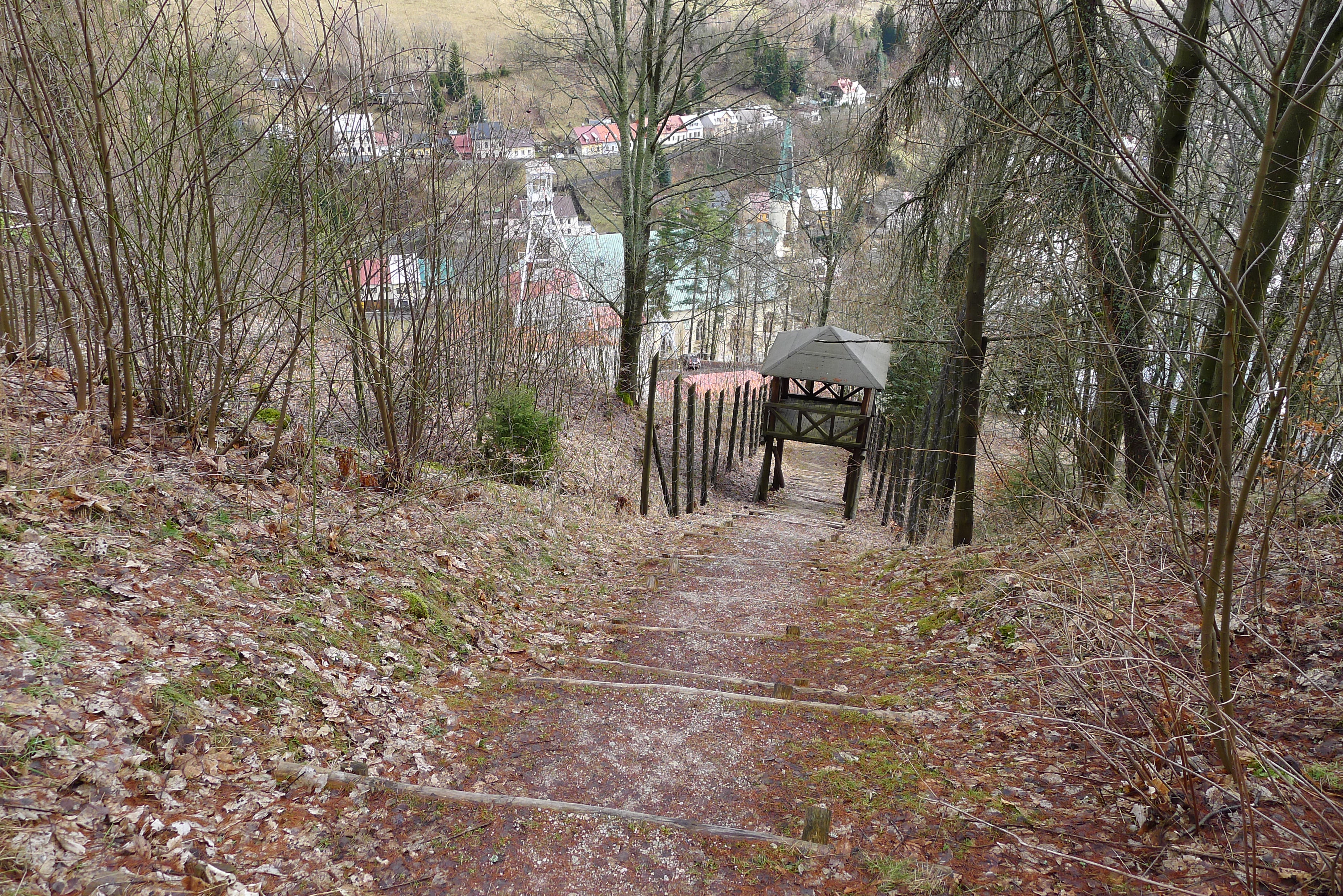
In the discourse of the Czech history sciences, the topic of forced labour and suffering of the victims of political persecution in the Jáchymov uranium mines attracts plenty of attention of researchers, due to the “social and political demand stemming from the early years following the Velvet Revolution and from historians’ endeavour to map the fates of those groups who were most affected” (Pinerová 2018, 16). Further, it is underlined by a number of memoirs and fictionalized accounts of the stories of political prisoners, which were published and adapted for the screen plentifully after 1989 (Ullmannová 2020, 106).
The components strictly connected to uranium mining within the Erzgebirge/Krušnohoří WH site are the Uranium Mining Landscape in Saxony and the Red Tower of Death in Bohemia. Altogether, it is quite a significant part of the inscribed properties and is generally well-described by the nomination. However, in the final OUV synthesis of the WH site, uranium is only mentioned once. Uranium mining as heritage is nevertheless a novelty for the WH list and a significant aspect of heritage of the Cold War and nuclear arms race. Uranium mines (and extraction activity in general6) have traditionally been rather considered a threat for WH sites, 7 but here, they have been for the first time included among the listed properties which should be protected. Within the Erzgebirge/Krušnohoří Mining Region uranium is included as one of the many ores mined here. Although some characteristics of the mining remain similar, uranium stands out for its impact on the health of individuals as well as on entire global political processes in the 20th century. The existing discourse of Cold War heritage8 is not connected to the discourse established in the nomination of the Erzgebirge/Krušnohoří WH site – neither is research in dark heritage9 and toxic heritage,10 also pertaining to the topic uranium mining and its use in nuclear power and arms.
The Cold War era is still a rather recent history, with a diverse range of memories attached to it. This together results in an escalated multivocality as well as abundance of tangible documents. Responses to it are recalibrated in accordance with the ensuing events (Fairclough G. 2007, 22). Cold War is usually associated with the duality of West and East, but the lived experience in each country was different (Fairclough G. 2007, 25–26). Two countries in question in this case, both part of the Eastern Bloc and the Cold War power struggle, de facto do not exist anymore: the GDR and Czechoslovakia. In present, a range of different attitudes to this past are present in the societies and Cold War heritage remains controversial. The opportunity to use the act of nomination of uranium mines to WH list to incite a public discussion in both countries and on the global level was not fully utilized, despite the observation made by Sharon Macdonald (2015, 19) that “the act of publicly addressing terrible historical acts undertaken by the collective is no longer necessarily a disruption to positive identity formation.”
Conclusion
Utilizing the framework of the AHD in connection with the WH site in the Central and Eastern Europe, it can be questioned whether the discourses of heritage of Central and Eastern Europe are based on Western conceptions of AHD. On the one hand, the formation of institutionalized conservation in the 19th and early 20th century did not only take place in Great Britain or France, but also Germany and Austria-Hungary, who were particularly active in systematic documentation of monuments and production of first topographies. On the other – as has been indicated in this text – throughout the course of the 20th century, countries of Central and Eastern Europe were often ruled by undemocratic regimes which imposed and officially permitted only a single way of interpretation of events, be it in regard to cultural heritage or other aspects of human life. After four decades of state socialism, Central and Eastern European countries underwent a transformation and subsequently joined some of Western institutional structures and adopted its discourses – including the World Heritage. However, such process works in both ways. The nominated property contributes to the authorized discourse by broadening the WH list, and the listing in turn provides a form of authorization for the (discourse of the) nominated site. By deciding to pursue a WH status, the authors of the nomination are in a position where they adopt the authorized discourse of the WH Convention in order to acquire the listing. This takes place within the bounds of the authorized WH discourse (Smith 2006, 35).
Parts of the OUV summary (UNESCO 2019, 262) emphasize the “achievements in mining industry, innovations and improvements of technology and interchange of such knowledge,” placing emphasis on the positive aspects of the mining heritage. This coincides with Smith’s (2006, 58) claim that a “sense of dissonance is often marginal to the authorized sense of what heritage is about.” Within the AHD, memory has also been seen as subjective, compared to the supposedly ‘objective’ history: again in the words of Smith (2006, 58) “an accumulation of fact within an authorized narrative.”Constructing the WH site around history of polymetallic ores extraction and mining technologies advances the creation of a sense of objectivity. Some of the difficult narratives connected to mining in general and in the context of the Ore Mountains are studied in the extensive Nomination Dossier (such as the uranium mining, where regard for the difficult aspects is inevitable), others are not accounted for. In the final, condensed version of the OUV synthesis, such narratives do not break through.
Despite the difficult heritage being contested and uncomfortable, I believe it is necessary to address it and critically engage with it to be able to come to terms with it, especially since some of the narratives around it were silenced for decades and are still imbued with conflict. Education can be one of the ways to begin dealing with this legacy. The educational programmes related to Erzgebirge/Krušnohoří as a WH site have gone beyond this requirement and acknowledge also the importance of sustainability. Although not all of them clearly challenge the dominant WH discourse, they try to integrate communities and youth through the mining heritage across borders; other programmes try to prompt students to curiosity through student-led research about their regional histories and cross-border relationships. Cultural heritage is approached as a tool to sustaining itself in the long-term – through people, their interest and their will to participate in the construction of heritage and strengthening of mutual understanding. The programmes succeed in going beyond simply educating future generations by actively engaging with heritage along with all of its ambiguities. I perceive this as especially urgent in areas where all social structures were previously severed and have not fully recovered, and where it is needed to create new connections to strengthen the local participation and create better conditions for a democratic debate. From a different point of view, such heritage can be regarded as a contributor to regional development in the Ore Mountains, which are gradually losing traditional livelihoods in mining and, especially on the Czech side, also tend to fall behind in economic indicators.
Acknowledging the effort of the nomination team to raise awareness about heritage of the Ore Mountains region and its contribution to mining heritage worldwide, and their well-meaning endeavour to conduce to development of the region dealing with structural challenges, it needs to be accentuated that doing so through the World Heritage programme has its ramifications. The authorized discourse lends recognition to the inscribed property, but at the expense of a simplification of the multivocality of the vast and heterogeneous landscape the Ore Mountains comprise of.
In the early stages of the proposal process, the ICOMOS (2019, 247) evaluation argued for creation of “more comprehensive and legible landscape units.” The result is perhaps a more legible WH site centred around ore mining, but at the expense of disregard for its complexity and ambiguity – notwithstanding it is precisely this at times “unintelligible complexity” of the oscillations in interpretations what characterizes the heritage of not just the Ore Mountains, but most of Central and Eastern Europe (Tunbridge & Ashworth 1996, 135). The discourses that end up on the margins are often precisely those that are difficult and uncomfortable. Moreover, the difficult discourses inconvenient to the AHD to an extent happen to overlap with those narratives which used to be silenced or ideologically instrumentalized by the undemocratic regimes ruling the GDR and Czechoslovakia for a large part of the second half of the 20th century.
The authorized discourse of the WH programme preferred the image of a legible site with clear, ‘objective’ categorization over a conflict-ridden heterogeneous landscape with manifold narratives. It would not fit the authorized conception of heritage that is being reasserted by designating new sites constructed in compliance with the AHD. The Ore Mountains are a space where heterogeneity is particularly important to the understanding of local identities, full of conflicting experiences, and where attempts at coming to terms with some of the difficult pasts still represent a thankless task. Upholding the heritage of the Ore Mountains might benefit from seeking alternative approaches and frameworks challenging the AHD, and from persistently asking to some of the most fundamental questions about the nature of heritage as such. This may be applied to the heritage of the whole of Central and Eastern Europe.
References
Albert, Marie-Theres 2019: Transboundary European World Heritage – a Topic for UNESCO Associated Schools. Berlin: Institute Heritage Studies. (available at https://worldheritage-education.eu/resources/conference/Keynote%20Marie-Theres%20Albert.pdf)
Černá, Eliška 2019: Krušné hory byly Silicon Valley celého světa, říká koordinátor nové české památky UNESCO [The Ore Mountains Were the ‚Silicon Valley‘ of the Whole World, says the Coordinator of the New Czech UNESCO Heritage Site]. Deník N 6.7.2019. (available at: https://denikn.cz/159593/krusne-hory-byly-silicon-valley-celeho-sveta-rika-koordinator-nove-ceske-pamatky-unesco/)
Di Giovine, Michael 2008: The Heritage-scape: UNESCO, World Heritage, and Tourism. Plymouth: Lexington Books.
Eberhardt, Piotr 2002: Ethnic Groups and Population Changes in Twentieth-Century Central-Eastern Europe: History, Data and Analysis. London: Routledge.
Fairclough, Graham 2007: The Cold War in context: Archaeological explorations of private, public and political complexity. In: A Fearsome Heritage: Diverse Legacies of the Cold War, John Schofield & Wayne Cocroft (eds.). London: Routledge.
Gibson, Lisanne & Pendlebury, John 2009: Valuing Historic Environments. London: Routledge.
Grazuleviciute-Vileniske, Indre & Urbonas, Vilius 2014: Urban regeneration in the context of post-Soviet transformation: Lithuanian experience. Journal of Cultural Heritage 15:6 (637–643).
Guzi, Martin, Mikula, Štěpán & Huber, Peter 2019: Old Sins Cast Long Shadows: The Long-Term Impact of the Resettlement of the Sudetenland on Residential Migration. IZA Discussion paper series 126:12536 (1–79).
Harrison, Rodney 2013: Heritage – Critical Approaches. London: Routledge.
ICOMOS 2019: Advisory Body Evaluation. Paris: UNESCO. (available at https://whc.unesco.org/en/list/1478/documents/)
Ifversen, Jan 2019: Europe and the Concept of Margin. In: Re-Mapping Centre and Periphery: Asymmetrical Encounters in European and Global Contexts, Tessa Hauswedell, Axel Körner & Ulrich Tiedau (eds.). London: UCL Press.
Jelen, Jakub & Kučera, Zdeněk 2017: Approaches to identification and interpretation of mining heritage: the case of the Jáchymovsko area, Ore Mountains, Czechia. Hungarian Geographical Bulletin 66:4 (321–336).
Macdonald, Sharon 2009: Difficult Heritage: Negotiating the Nazi Past in Nuremberg and Beyond. London: Routledge.
Macdonald, Sharon 2015: Is ‘Difficult Heritage’ Still ‘Difficult’? Why Public Acknowledgment of Past Perpetration May No Longer Be So Unsettling to Collective Identities. Museum International 67:1–4, (6–22).
Management Plan 2019: Erzgebirge/Krušnohoří Mining Region World Heritage List Management Plan. Paris: UNESCO. (available at https://whc.unesco.org/en/list/1478/documents/)
Mining Heritage of the Montanregion 2014: Hornické památky Montanregionu Krušné hory/Erzgebirge – Denkmale des Bergbaus in der Montanregion Erzgebirge/Krušnohoří. Boží Dar: Montanregion Krušné hory – Erzgebirge, o.p.s. (available at http://www.montanregion.cz/images/dokumenty/hornicke_pamatky_montanregionu.pdf)
Müller, Martin 2018: In Search of the Global East: Thinking between North and South. Geopolitics 25:3, (1–22).
Murdock, Caitlin & Boutilier, James 2010: Changing Places: Society, Culture and Territory in the Saxon-Bohemian Borderlands, 1870-1946. Ann Arbor: University of Michigan Press.
Murzyn, Monika 2008: Heritage Transformation in Central and Eastern Europe. In: The Ashgate Research Companion to Heritage and Identity, Brian Graham & Peter Howard (eds.). Farnham: Ashgate Publishing.
Nomination Dossier 2017: Erzgebirge/Krušnohoří Mining Region World Heritage List Nomnation Dossier 2017. Paris: UNESCO. (available at https://whc.unesco.org/en/list/1478/documents/)
Pinerová, Klára 2018: Jáchymov. Jeviště bouřlivého století [Jáchymov. The Stage of the Tumultuous Century]. Prague: ÚSTR.
Rampley, Matthew 2012: Heritage, Ideology and Identity in Central and Eastern Europe. Contested Pasts, Contested Presents. Martlesham: Boydell Press.
Samuels, Joshua 2015: Difficult Heritage. In: Heritage Keywords. Rhetoric and Redescription in Cultural Heritage, Kathryn Lafrenz Samuels & Trinidad Rico (eds.). Denver: University Press of Colorado.
Sedlářová, Barbora 2010: Poznamenáni šachtou. Proměna poetiky postavy horníka v české literatuře. Diplomová práce [The Bottomless Pit. The Diverse Portrayal of the Miner as the Subject in Czech Literature. Master Thesis]. Prague: Charles University.
Smith, Laurajane 2006: Uses of Heritage. London: Routledge.
Spurný, Matěj 2019: Making the Most of Tomorrow: A Laboratory of Socialist Modernity in North Bohemia. Prague: Karolinum Press.
Spurný, Matěj 2013: Reliability and the Border. The Discourse of the Czech Borderlands. Österreichische Zeitschrift für Politikwissenschaft 42:1, (83–94).
Tunbridge, J.E. & Ashworth, G.J. 1996: Dissonant Heritage: The Management of the Past as a Resource in Conflict. Hoboken: Wiley.
Ullmannová, Klára 2020: Critical Analysis of the ‘Authorized Heritage Discourse’ in a ‘Difficult’ Context. The Case of the Erzgebirge/Krušnohoří World Heritage Site [Master’s Thesis in Conservation]. Visby: Uppsala University.
UNESCO 1972: World Heritage Convention: Convention Concerning the Protection of the World Cultural and Natural Heritage, adopted in 1972. Paris: UNESCO.
UNESCO World Heritage Committee 2019: Decisions adopted during the 43rd session of the World Heritage Committee (Baku, 2019) WHC/19/43.COM/18, 2019. Baku: UNESCO. (available at https://whc.unesco.org/archive/2019/whc19-43com-18-en.pdf)
Waterton, Emma & Smith, Laurajane & Campbell, Gary 2006: The Utility of Discourse Analysis to Heritage Studies: The Burra Charter and Social Inclusion. International Journal of Heritage Studies 12:4, (339–355).
Waterton, Emma & Watson, Steve 2015: The ontological politics of Heritage; or how research can spoil a good story. In: The Palgrave Handbook of Contemporary Heritage Research, Emma Waterton & Steve Watson. London: Palgrave Macmillan.
Online sources
Euroregion Erzgebirge: http://euroreg.cz/?p=4813 [24.11.2023]
Heritagestudies.eu: https://heritagestudies.eu/en/world-heritage-mining-cultural-landscape-erzgebirge-krusnohori/ [24.11.2023]
Montanregion.cz: http://www.montanregion.cz/cs/o-spolecnosti.html [24.11.2023]
Montanregion-Erzgebirge.de: https://www.montanregion-erzgebirge.de/en/world-heritage-discover/background/the-long-journey-from-concept-to-nomination.html [24.11.2023]
Olbernhau.de: https://www.olbernhau.de/en/unesco-welterbe-montanregion-erzgebirge [24.11.2023]
SN-CZ2020.eu: https://www.sn-cz2020.eu/de/projekte/gefoerderte_projekte/basisseite_89.jsp [24.11.2023]
WHC.UNESCO.org: https://whc.unesco.org/en/list/1478/ [24.11.2023]
Footnotes
- Different terms – “German-speaking people/population”, “German Bohemians”, “ethnic Germans”, “German Czechoslovaks” or “Sudeten Germans” – are used in literature to describe the inhabitants of Czechoslovakia (1918 –38, 1945–1948) whose first language was German. ↩︎
- See for example Schulz, Sabrina & Schwartzkopff, Julian 2018: European Lignite-Mining Regions in Transition Challenges in the Czech Republic and Germany. Prague: Heinrich-Böll-Stiftung. (available at https://cz.boell.org/sites/default/files/final_report_eng_online_kb.pdf) ↩︎
- See e.g. Turner, S.D. 2012: World Heritage Sites and the extractive industries. [24.11.2023] ↩︎
- For example in the following case: https://whc.unesco.org/en/list/147/ [24.11.2023] ↩︎
- See for example Schulz, Sabrina & Schwartzkopff, Julian 2018: European Lignite-Mining Regions in Transition Challenges in the Czech Republic and Germany. Prague: Heinrich-Böll-Stiftung. (available at https://cz.boell.org/sites/default/files/final_report_eng_online_kb.pdf) ↩︎
- See for example Schulz, Sabrina & Schwartzkopff, Julian 2018: European Lignite-Mining Regions in Transition Challenges in the Czech Republic and Germany. Prague: Heinrich-Böll-Stiftung. (available at https://cz.boell.org/sites/default/files/final_report_eng_online_kb.pdf) ↩︎
- See for example Schulz, Sabrina & Schwartzkopff, Julian 2018: European Lignite-Mining Regions in Transition Challenges in the Czech Republic and Germany. Prague: Heinrich-Böll-Stiftung. (available at https://cz.boell.org/sites/default/files/final_report_eng_online_kb.pdf) ↩︎
- See for example Schulz, Sabrina & Schwartzkopff, Julian 2018: European Lignite-Mining Regions in Transition Challenges in the Czech Republic and Germany. Prague: Heinrich-Böll-Stiftung. (available at https://cz.boell.org/sites/default/files/final_report_eng_online_kb.pdf) ↩︎
- See for example Schulz, Sabrina & Schwartzkopff, Julian 2018: European Lignite-Mining Regions in Transition Challenges in the Czech Republic and Germany. Prague: Heinrich-Böll-Stiftung. (available at https://cz.boell.org/sites/default/files/final_report_eng_online_kb.pdf) ↩︎
- See for example Schulz, Sabrina & Schwartzkopff, Julian 2018: European Lignite-Mining Regions in Transition Challenges in the Czech Republic and Germany. Prague: Heinrich-Böll-Stiftung. (available at https://cz.boell.org/sites/default/files/final_report_eng_online_kb.pdf) ↩︎